
History of Mahesana
Mahesana was established by Mesaji Chavda of the Chavda Dynasty in Vikram Samwat 1414. Later, the Gaekwads established their administrative headquarters in Mahesana in 1902. In 1947, with India’s independence, Mahesana was merged with the Union of India. It was part of Bombay state. Later in 1960, with the division of Bombay state into Maharashtra and Gujarat, Mahesana became one of the districts of Gujarat. There is a place built by Gaekwads in the city known as Rajmahal.
Mahesana is a prominent city located in the northern part of Gujarat, India. The city covers an area of approximately 31.08 square kilometers, and with the formation of the Mahesana Municipal Corporation, the city's jurisdiction is expected to expand to 112 square kilometers.
Mahesana has a presence of many major educational institutes. It serves as the administrative headquarters of the Mahesana district and is known for its rich cultural heritage, vibrant community, and industrial growth. The city's history is a fascinating blend of ancient traditions and modern development, making it one of the most significant urban centers in the region.
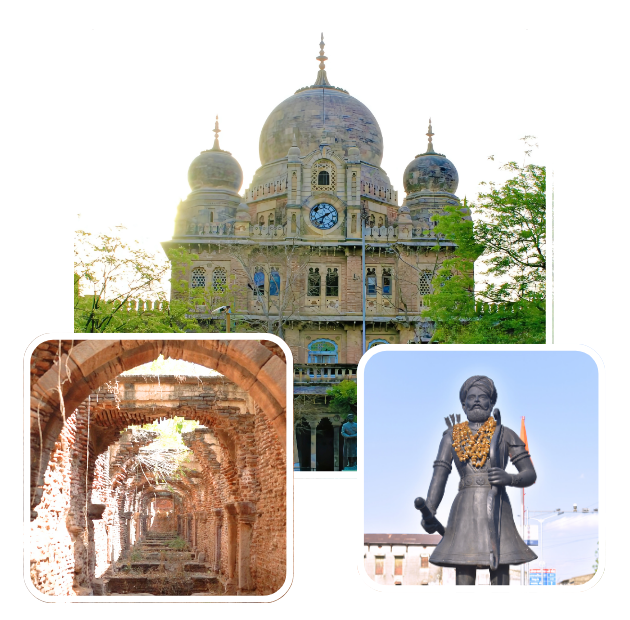
British Era
During the British rule in India, Mahesana emerged as an administrative and economic center. The establishment of railway connectivity under British rule significantly contributed to the city's growth. Mahesana became an important junction connecting various parts of Gujarat and Rajasthan, boosting trade and connectivity. The introduction of the railway line between Ahmedabad and Delhi via Mahesana in the late 19th century was a landmark development that transformed the town into a bustling hub. The construction of public infrastructure, schools, and administrative offices laid the foundation for modern Mahesana.
Post-Independence Development
After India gained independence in 1947, Mahesana continued to progress with rapid urbanization and industrialization.
Key Developments Over the Years
Dairy Industry: Mahesana is home to one of the largest dairy cooperatives in India, Dudhsagar Dairy, contributing significantly to the White Revolution.
Oil and Natural Gas Discovery: The ONGC Mahesana Asset became a crucial hub for petroleum extraction, supporting the city’s economy.
Agricultural and Educational Growth: The region developed into an agricultural hub, with new universities and research institutions enhancing its knowledge base.
Infrastructure Expansion: Roads, railways, and modern public services helped transform Mahesana into a well-connected and growing city.